CO alarm calls: what your CSR should say in the first minute, and what the tech checks after
A word-for-word phone script for carbon monoxide alarm calls, a fast way to tell an alarm from a low-battery chirp, and the whole-house checklist your tech should run once the fire department clears the home.
By Rivet Editorial Team · · 7 min read
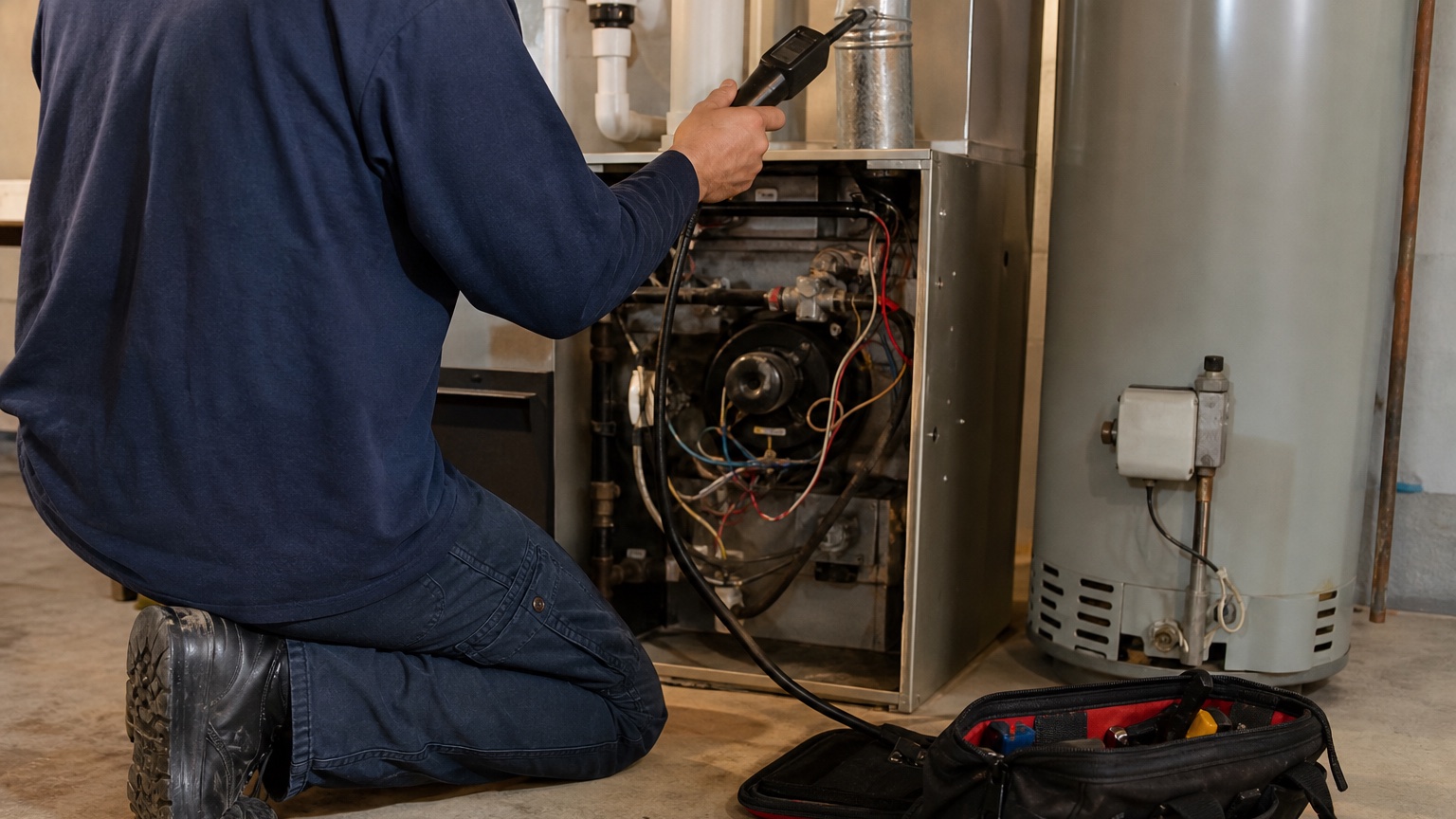
When a caller says their carbon monoxide alarm is going off, your CSR has one job in the first minute: get everyone out of the house and get them to call 911. Booking the visit comes second. An HVAC shop is the follow-up call, never the first responder.
That sounds obvious until it is 9 p.m., the caller is calm, the alarm "only went off once," and they just want someone to come look at the furnace tomorrow. This article gives you the phone script for that moment, a quick way to tell an alarm from a chirp, and the checklist your tech should run once the fire department has cleared the house.
Why this call deserves its own script
Carbon monoxide has no color or smell, and its early symptoms look like the flu. The CDC says that each year more than 400 Americans die from unintentional CO poisoning not linked to fires, more than 100,000 visit an emergency room and more than 14,000 are hospitalized (CDC figures, as of November 2026).
The CDC also notes that people who are asleep or intoxicated can die before they ever feel symptoms. That is why a calm caller is not a safe caller.
Heating season is when these calls show up. Gas- and oil-burning furnaces and portable generators are on the CDC's list of household CO sources, and both run hardest when it turns cold.
Step 1: Tell an alarm from a chirp in 15 seconds
Many "my CO detector is going off" calls are really "my CO detector is chirping." Your CSR needs to sort the two fast, without talking the caller out of a real alarm.
Kidde, for example, describes its alarm patterns this way:
- Four short beeps, five seconds of silence, four short beeps, repeating: Kidde says the alarm may have detected CO, or it may be a nuisance alarm. Nobody can tell which over the phone, so your CSR treats it as real.
- A number on a digital display, with or without beeping: Kidde says to assume the unit is sensing CO, leave the home and call 911.
- One chirp about every 60 seconds: low battery.
- One chirp about every 30 seconds: on Kidde units, this can mean the alarm has reached end of life (Kidde says this starts seven years after first power-up) or a malfunction. Kidde warns that an alarm in end-of-life mode cannot detect CO.
Other brands use different patterns. If the caller is not sure, the rule is simple: if you can't tell, treat it as an alarm. The label on the back of the unit usually explains the sounds and shows a replace-by date.
Step 2: The first-minute phone script
Print this and tape it next to every phone, and give it to whoever answers after hours.
CSR: "Is the alarm sounding right now, or showing a number on the screen?" If yes, or not sure: "Okay. Please take everyone, including pets, outside to fresh air right now. Don't stop to look for the cause. Once you're outside, call 911 or your fire department. I'll stay on the line while you walk out." If they push back ("it's probably nothing"): "It may be nothing, and I hope it is. But the safety agencies are clear that you get out first and let the fire department check the air. We can't measure CO over the phone." Once they are outside: "Is anyone feeling a headache, dizziness, nausea, or confusion?" If yes: "Tell 911 that, and tell them which people feel it." "After the fire department says it's safe to go back in, call us back, or I can book a tech now for as soon as they clear the house. Don't go back inside until they tell you to."
That wording follows the U.S. Consumer Product Safety Commission's instructions almost line for line. The CPSC says never to ignore an alarming CO alarm, move outside to fresh air immediately, call emergency services or 911, and not re-enter until responders give permission.
What the CSR should never say
- "Just pull the battery and see if it stops."
- "Open some windows and turn the furnace off, and we'll come in the morning." That keeps people inside a house nobody has checked, and the source is still there.
- "That model always false-alarms."
- Anything that sounds like a diagnosis. Your CSR can't see the house.
If it's only a chirp
If the caller describes a clear 60-second chirp and nobody feels sick, the CSR can walk them through changing the battery. If it is a 30-second chirp or the alarm is past its replace-by date, tell them the unit needs to be replaced today, since an expired alarm may not detect CO. This is a fair moment to offer a safety check of their fuel-burning equipment, but don't oversell it.
Step 3: What to write on the ticket
When the caller rings back from outside or after the fire department leaves, capture these before you book:
- Did the fire department come, and did they tell the homeowner a reading or a likely source?
- Is the gas or the heating system currently shut off? Who shut it off?
- Which fuel-burning appliances are in the home: furnace or boiler, water heater, gas range, fireplace, space heaters, generator, attached garage?
- Did anyone have symptoms, and did they get worse at home and better away from it?
- How old is the CO alarm and where is it mounted?
- Is there heat? If the system is shut off in a freeze, that changes the priority and you may also be looking at frozen pipe risk.
- Has the alarm gone off again since they went back in? The CPSC says that if an alarm reactivates within 24 hours, the household should repeat the get-out-and-call-911 steps and then have a qualified technician check all fuel-burning equipment. If the answer is yes, go back to the Step 2 script before you book anything.
Treat a no-heat home after a CO event as a same-day job and put it at the top of the board.
Step 4: The tech's checklist on site
Your techs know how to combustion-test a furnace. What gets skipped is the rest of the house. The EPA lists the common indoor CO sources: unvented kerosene and gas space heaters, leaking chimneys and furnaces, back-drafting from furnaces, gas water heaters, wood stoves and fireplaces, gas stoves, generators and other gas-powered equipment, and car exhaust from attached garages.
A good CO call visit covers all of them, not just the unit you came for:
- Furnace or boiler: combustion analysis per the manufacturer's specs, flame appearance, heat exchanger inspection, venting and draft.
- Water heater: draft at the hood, signs of spillage, vent connection. A furnace and water heater sharing a flue can back-draft together.
- Flue and chimney: blockages, disconnected or rusted vent pipe, condensate damage.
- Gas range: the EPA notes CO levels near a properly adjusted gas stove are often 5 to 15 ppm, and 30 ppm or higher near a poorly adjusted one. Compare that with 0.5 to 5 ppm in homes without gas stoves.
- Attached garage and generator: ask whether a car was warmed up in the garage or a generator was running near a window, door or vent.
- The alarm itself: check its age and placement. The CPSC recommends alarms on every level and outside sleeping areas, away from heating vents, and not in kitchens or right above fuel-burning appliances. The CDC says to replace alarms per the manufacturer or every 5 years.
Use your own company's written action levels for ambient and flue readings, and write every reading on the invoice. If you find nothing, say so plainly and record what you tested. That record protects the homeowner and your shop.
What the numbers mean for the homeowner
Homeowners will ask, "How bad was it?" Keep the answer factual. The CPSC says most people will not have symptoms from prolonged exposure to about 1 to 70 ppm, but sustained levels above 150 to 200 ppm can cause disorientation, unconsciousness and death. People with heart disease, anemia or breathing problems, infants and the elderly are at higher risk, per the CDC. Leave medical questions to the doctor.
Step 5: Turn the scare into a maintenance habit, honestly
The CDC, the CPSC and the EPA all recommend having heating systems and other fuel-burning appliances professionally inspected and serviced every year. You don't need to invent urgency. Quote them.
After a CO call, a fair follow-up is:
- A written summary of what was tested and found.
- A quote for any repair, with a clear "safe to run / not safe to run" line.
- An offer to put the home on your annual tune-up plan, with alarm replacement dates noted.
Don't use fear in ads or on the phone. A homeowner who just stood in the driveway with their kids remembers who handled it calmly.
Make sure the after-hours line says the same thing
The riskiest version of this call is the one that comes in at 2 a.m. and reaches voicemail, an answering service without your script, or a tired on-call tech who says "turn it off and we'll come in the morning."
Whoever or whatever answers after hours needs the Step 2 wording word for word, plus a rule to flag the call to your on-call tech. If you use an AI receptionist such as Rivet, which answers calls 24/7, says it is an AI and sends the owner a summary, put the get-out-and-call-911 instruction in its call rules and test it with a fake call before the next cold snap.
Then run the same test on your own office line this week. Call in, say "my CO alarm is beeping," and listen to what happens in the first 30 seconds.
Sources
Keep reading
Heat pump "not heating" calls: a phone script that sorts defrost from real failures
Steam, lukewarm vents and "AUX" on the thermostat flood the phones in the first cold snap. Here are six triage questions, what manufacturers say is normal, and the red flags that always mean book a tech.
Nov 15, 2026 · 8 min read
Winter roof work: a fall and cold-stress safety plan for roofing crews
The OSHA fall rules that still apply in snow, a pre-climb load and hazard check, the wind-chill numbers that matter, cold-stress symptoms every crew lead should know, and a one-page morning checklist for the truck.
Nov 14, 2026 · 8 min read
Holiday lights tripping the GFCI: an electrician's phone script and the fixes worth quoting
Most holiday-light trip calls are a GFCI doing its job. Here is a 90-second phone script with red flags, an on-site checklist built on the NEC outdoor receptacle rules, and the three fixes to quote.
Nov 21, 2026 · 8 min read