Winter roof work: a fall and cold-stress safety plan for roofing crews
The OSHA fall rules that still apply in snow, a pre-climb load and hazard check, the wind-chill numbers that matter, cold-stress symptoms every crew lead should know, and a one-page morning checklist for the truck.
By Rivet Editorial Team · · 8 min read
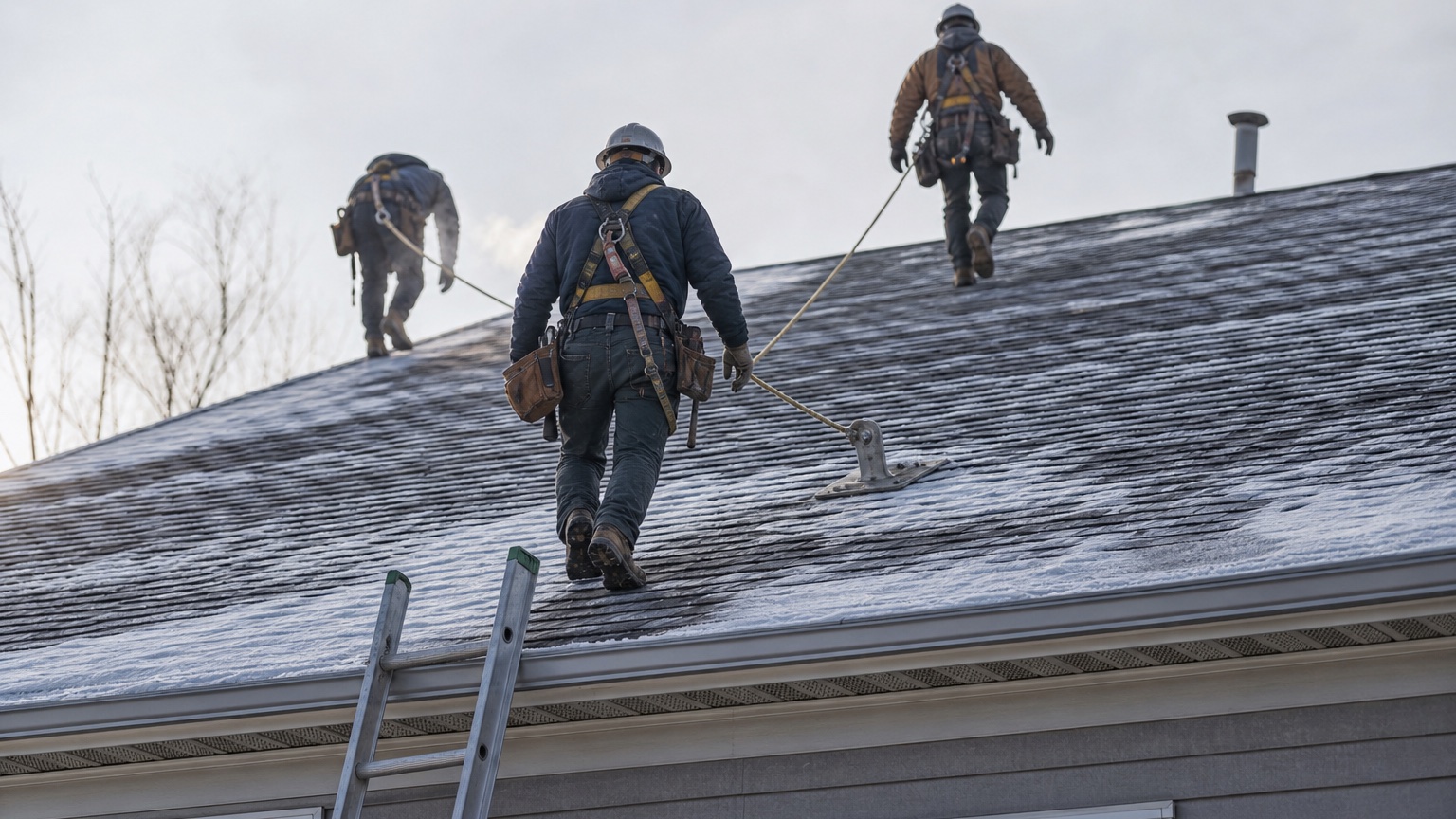
Winter roof work goes wrong in two ways. A worker slides off an icy edge, a hidden skylight or a ladder. Or a worker gets cold slowly enough that nobody notices until the shivering stops making sense. Both are preventable with a short plan your foreman can run every morning.
Here is the short version:
- Fall protection does not take the winter off. On construction work, OSHA requires protection at 6 feet or more above a lower level on both low-slope and steep roofs.
- Snow hides holes. Mark skylights, drains and vents before the snow comes, and check that the roof can carry the snow plus your crew and gear.
- Cold is a hazard OSHA can cite you for even without a cold standard. Breaks in a warm place, a buddy system and a stop-work rule based on wind chill cover most of it.
The rest of this article turns that into a morning checklist, a wind-chill rule you can use, and the symptoms every crew lead should know.
Why winter is the dangerous season on a roof
Within construction, roofing already has the most fatal falls. In 2023, roofing contractors accounted for 110 deaths from falls, slips and trips, or 26.0% of all such deaths in construction, according to the Bureau of Labor Statistics. Construction overall had 423 fatal falls, slips and trips that year.
Winter stacks extra hazards on top of that. OSHA's hazard alert on rooftop snow removal says falls cause the most deaths and injuries in that work, and that workers fall off roof edges, through skylights, and from ladders and aerial lifts. Roofs can also collapse under snow, melt water and the weight of the crew.
The incidents in that alert are ordinary jobs. One worker on a 12-foot aluminum ladder was clearing snow from a low-slope roof 10 feet up when the ladder feet slid. He hit his head and died days later. Another fell more than 11 feet while shoveling a residential roof.
Notice the heights. These were not tall buildings. A garage, a porch roof or a second-story addition is enough.
The fall-protection rules that still apply in snow
There is no special winter exception. The rules your crews already follow are the rules that matter most now.
The 6-foot rule
Under OSHA's construction standard (29 CFR 1926.501):
- Low-slope roofs: workers doing roofing with unprotected sides and edges 6 feet or more above a lower level need guardrails, safety nets, personal fall arrest, or a warning line paired with guardrails. A safety monitoring system alone is allowed only on roofs 50 feet wide or less.
- Steep roofs: workers with unprotected edges 6 feet or more above a lower level need guardrails with toeboards, safety nets, or personal fall arrest.
If your crew is clearing snow as maintenance, not as part of a construction job, OSHA's general industry rules apply instead, and those trigger fall protection at 4 feet. If the snow is in the way of construction work, the construction rules apply, including on residential sites.
Harnesses, anchors and rescue
OSHA's alert spells out the details that slip in cold weather:
- Put harnesses on and buckle them snugly before going up, not on the roof with numb fingers.
- Anchor points must hold at least 5,000 pounds per attached worker, or be designed with a safety factor of two under a qualified person.
- Guardrails must be 42 inches high with a midrail.
- Have a written rescue plan for a worker hanging in a harness. In freezing wind, every minute a worker hangs there matters.
Ladders in ice
From the OSHA alert:
- Set the ladder on level, secure footing and check rungs for ice.
- Use the 1-to-4 angle: the base sits one foot out for every four feet of working length.
- Extend the ladder 3 feet above the roof edge, or secure it and use rail extensions.
- Knock snow off boots before climbing.
- Keep three points of contact, and don't carry heavy loads up. Climb first, then haul gear with a rope.
- Never use a snow rake or shovel while standing on a ladder.
Before you send anyone up: the snow-and-load check
OSHA's first recommendation for snow removal is to not go on the roof at all when you can avoid it. Use snow rakes or drag lines from the ground, or apply de-icer from a ladder.
When the job truly needs someone on the roof, run through these questions first. They come straight from OSHA's planning list:
- Can this be done from the ground?
- What is hidden under the snow? Skylights, roof drains and vents should be marked so workers can see them. On repeat customers, mark them in the fall.
- Can the roof hold it? Compare the roof's load limit against the weight of the snow, the workers and the equipment. Wet snow weighs more than dry snow, and an older or damaged roof may hold less than its design says.
- How will you remove the snow? Clear it evenly across the roof and don't pile it up, so you don't create an unbalanced load.
- Where are the power lines? Stay at least 10 feet from any line and treat every line as live, even if it's down or looks insulated. Use nonconductive extendable poles on snow rakes and assign someone to watch the distance.
- Who is below? Mark a safe zone on the ground. OSHA's example is keeping people back 10 feet from where snow will fall.
If a snowblower goes on the roof, keep it away from the edge. OSHA notes some manufacturers recommend staying 15 feet back. Never clear a clogged chute by hand: shut it off and wait for the parts to stop.
Cold stress: the hazard you can't see from the truck
OSHA has no specific cold-weather standard. That doesn't let you off the hook. Under the OSH Act, OSHA says employers must still protect workers from recognized cold stress hazards that cause or are likely to cause death or serious physical harm.
Know the four conditions
From OSHA's cold stress guidance:
- Hypothermia means body temperature below 95°F. The early sign is uncontrollable shivering. Later come confusion, slurred speech, clumsiness and slow breathing. It can happen above 40°F when a worker is soaked by rain, sweat or cold water.
- Frostbite shows up as red skin that develops gray or white patches on fingers, toes, nose or ears, along with numbness and hard skin. Don't rub it and don't rewarm it on site, because refreezing does more damage.
- Trench foot comes from feet that stay wet, and can happen at temperatures as high as 60°F. OSHA notes wet feet lose heat 25 times faster than dry feet.
- Chilblains are red, itchy, sometimes blistered skin from repeated exposure just above freezing.
For suspected hypothermia: call 911, get the worker into a warm room or a running truck, swap wet clothes for dry ones, and wrap them up, including the head and neck. Give warm, sweet drinks only if they're alert. Never alcohol.
Use wind chill, not the thermometer
Air temperature alone undersells the risk on an exposed roof. The National Weather Service calculates wind chill from air temperature and wind speed, and says exposed skin can freeze in 30 minutes at a wind chill of -19°F. That is what you get at 0°F with a 15 mph wind.
A few combinations from the NWS formula, to show how fast it drops:
- 40°F and 35 mph feels like 28°F (OSHA uses this same example)
- 30°F and 20 mph feels like about 17°F
- 20°F and 15 mph feels like about 6°F
- 10°F and 20 mph feels like about -9°F
Check the forecast wind, not just the high. A 30-degree day with gusts is a different job than a calm 30-degree day.
Set a written cold-day rule
OSHA and NIOSH both recommend the same controls. Write them down so the decision doesn't depend on who's foreman that day:
- Schedule the cold work for the warmest part of the day. Start tear-offs late morning on bitter days instead of at first light.
- Short, frequent breaks in a warm, dry place: a heated truck cab or a portable shelter.
- Buddy system. Nobody works a roof alone in the cold, and partners watch each other for shivering, confusion and pale patches on skin.
- Warm, sweet, non-alcoholic drinks and high-carb snacks on the truck.
- Extra workers or relief workers on long jobs, so people can rotate off the roof.
- Gear: several loose layers, waterproof insulated boots, a hat, and spare socks, gloves and a jacket in the truck. NIOSH also suggests a thermometer and chemical hot packs in the first-aid kit.
- Keep bare skin off cold metal.
Then pick your stop-work trigger in advance. A simple option is to tie it to a wind-chill number and to ice on the roof surface. Whatever you choose, the point is that the crew lead can call it without arguing with the office.
The office side: rescheduling without losing the job
A cold-day rule only works if the office can move jobs without losing customers. When a wind-chill day or an iced deck shuts down a tear-off, a few habits keep it from turning into a pile of angry voicemails:
- Call the next day's customers by 3 p.m. when the forecast says you won't work. Notice the afternoon before beats a 7 a.m. surprise.
- Give them a safety reason in one line. "We don't put crews on an iced roof. Your new date is Thursday."
- Hold the next open slot for them before you hang up, instead of promising to "call back with a date."
- Separate real leak emergencies from routine work. Active leaks may need a tarp from the ground or a ladder, not a full crew on the roof.
Bad-weather days can also bring a wave of incoming calls: leaks, ice dams, storm damage. If your office can't answer them all while it's rescheduling the week, an answering service or an AI receptionist like Rivet can pick up the overflow 24/7, say it's an AI, book the job onto your calendar and send you the summary.
A one-page morning checklist
Print this and keep it in the truck:
- Forecast checked: high, wind speed, wind chill, precipitation.
- Stop-work trigger met? If yes, call it before the crew drives out.
- Can this be done from the ground?
- Skylights, drains and vents marked or located.
- Roof load okay for snow plus crew plus gear.
- Fall protection set: harnesses on before climbing, anchors rated, rescue plan known.
- Ladder footing clear, rungs ice-free, 3 feet above the edge.
- Power lines located, 10-foot distance assigned to a watcher.
- Ground safe zone marked.
- Warm break spot, drinks, spare dry socks and gloves on the truck.
- Buddies assigned.
None of this is new. What changes in winter is how fast a skipped step turns into a fall or a frostbite case. Ten minutes on this list before the ladder goes up is the cheapest safety program you'll ever run.
Sources
- OSHA: Falls and Other Hazards to Workers Removing Snow from Rooftops and Other Elevated Surfaces (OSHA 3513)
- OSHA 29 CFR 1926.501: Duty to have fall protection
- OSHA Winter Weather: Cold Stress
- NIOSH: About Cold Stress
- National Weather Service: Wind Chill Chart
- BLS: Fatal falls in the construction industry in 2023
Keep reading
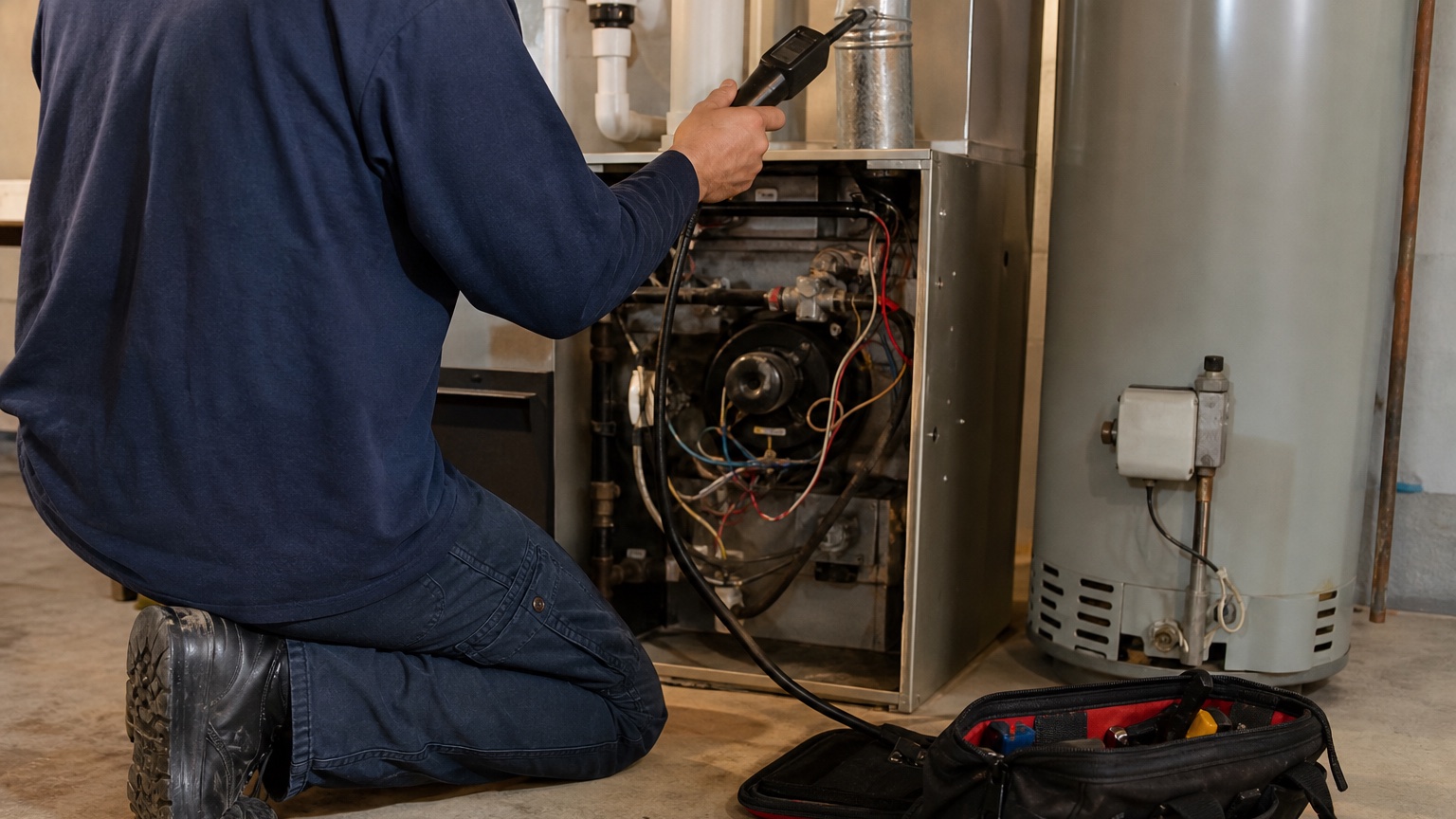
CO alarm calls: what your CSR should say in the first minute, and what the tech checks after
A word-for-word phone script for carbon monoxide alarm calls, a fast way to tell an alarm from a low-battery chirp, and the whole-house checklist your tech should run once the fire department clears the home.
Nov 21, 2026 · 7 min read
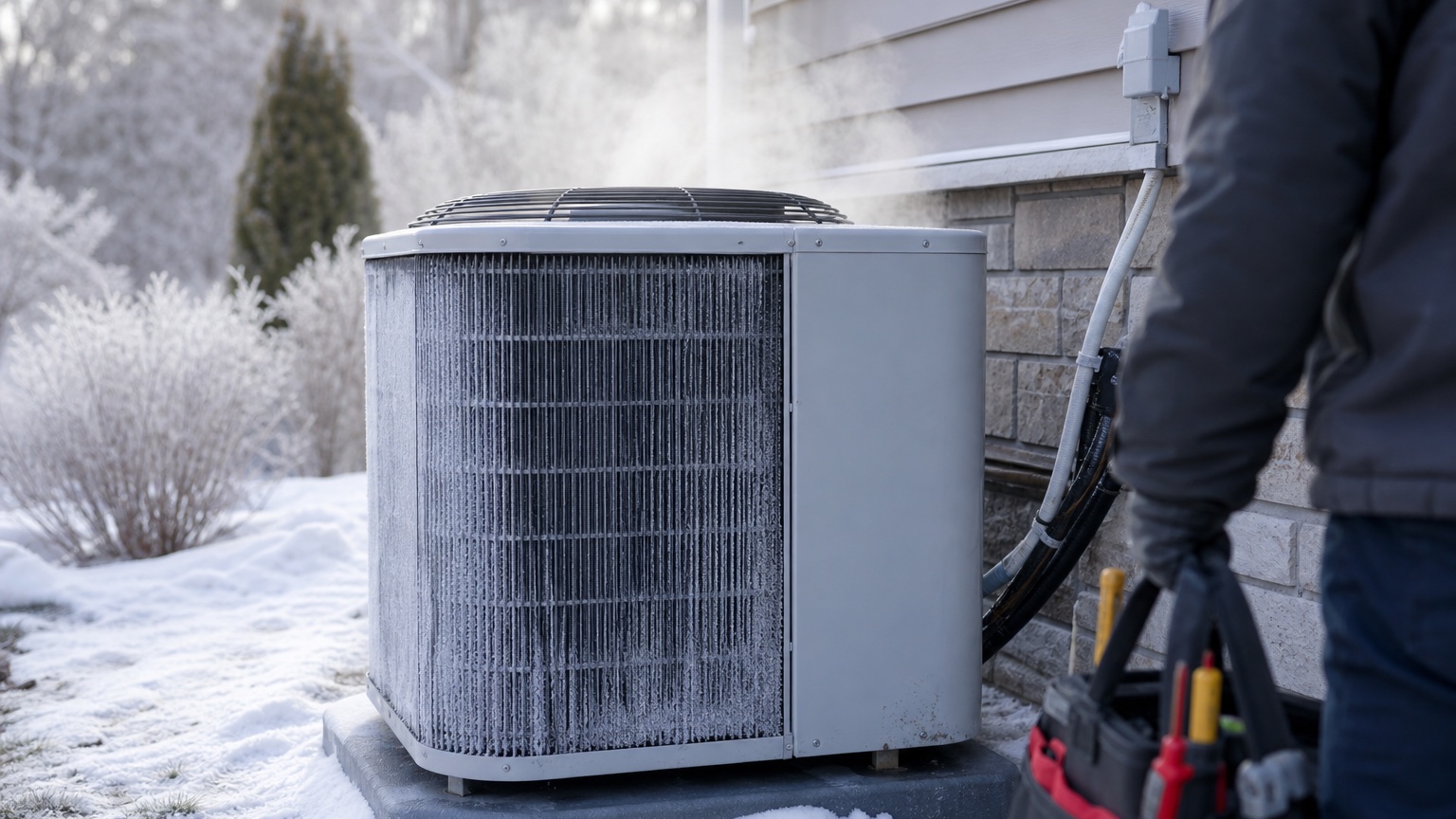
Heat pump "not heating" calls: a phone script that sorts defrost from real failures
Steam, lukewarm vents and "AUX" on the thermostat flood the phones in the first cold snap. Here are six triage questions, what manufacturers say is normal, and the red flags that always mean book a tech.
Nov 15, 2026 · 8 min read
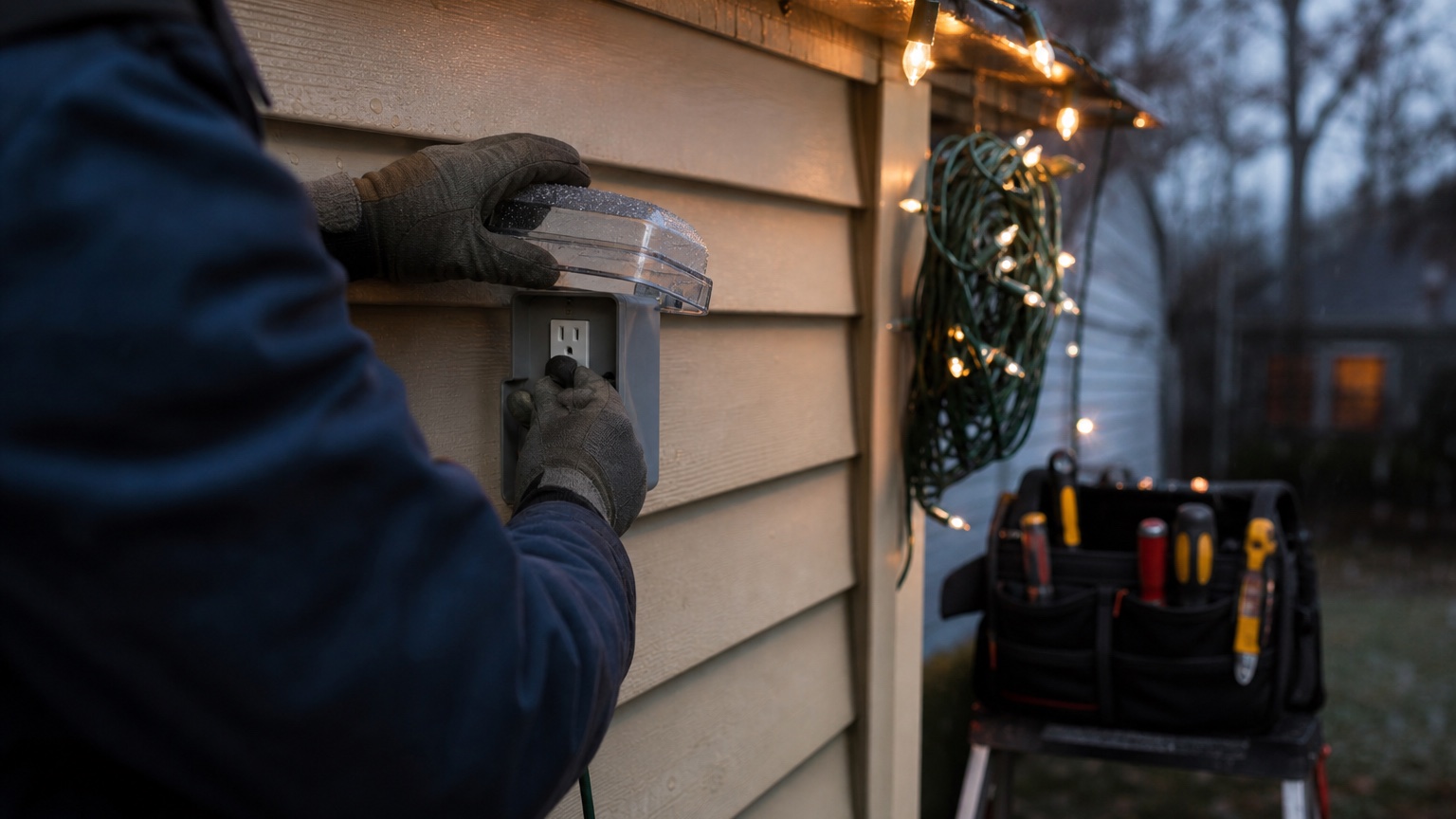
Holiday lights tripping the GFCI: an electrician's phone script and the fixes worth quoting
Most holiday-light trip calls are a GFCI doing its job. Here is a 90-second phone script with red flags, an on-site checklist built on the NEC outdoor receptacle rules, and the three fixes to quote.
Nov 21, 2026 · 8 min read