R-410A after EPA's 2026 rule change: what HVAC contractors can still install and repair
EPA dropped the R-410A installation deadline for pre-2025 equipment. Here is what you can still install, when a condensing-unit swap becomes a new system, the January 2027 VRF date, and a script for the 'is 410A banned?' call.
By Rivet Editorial Team · · 7 min read
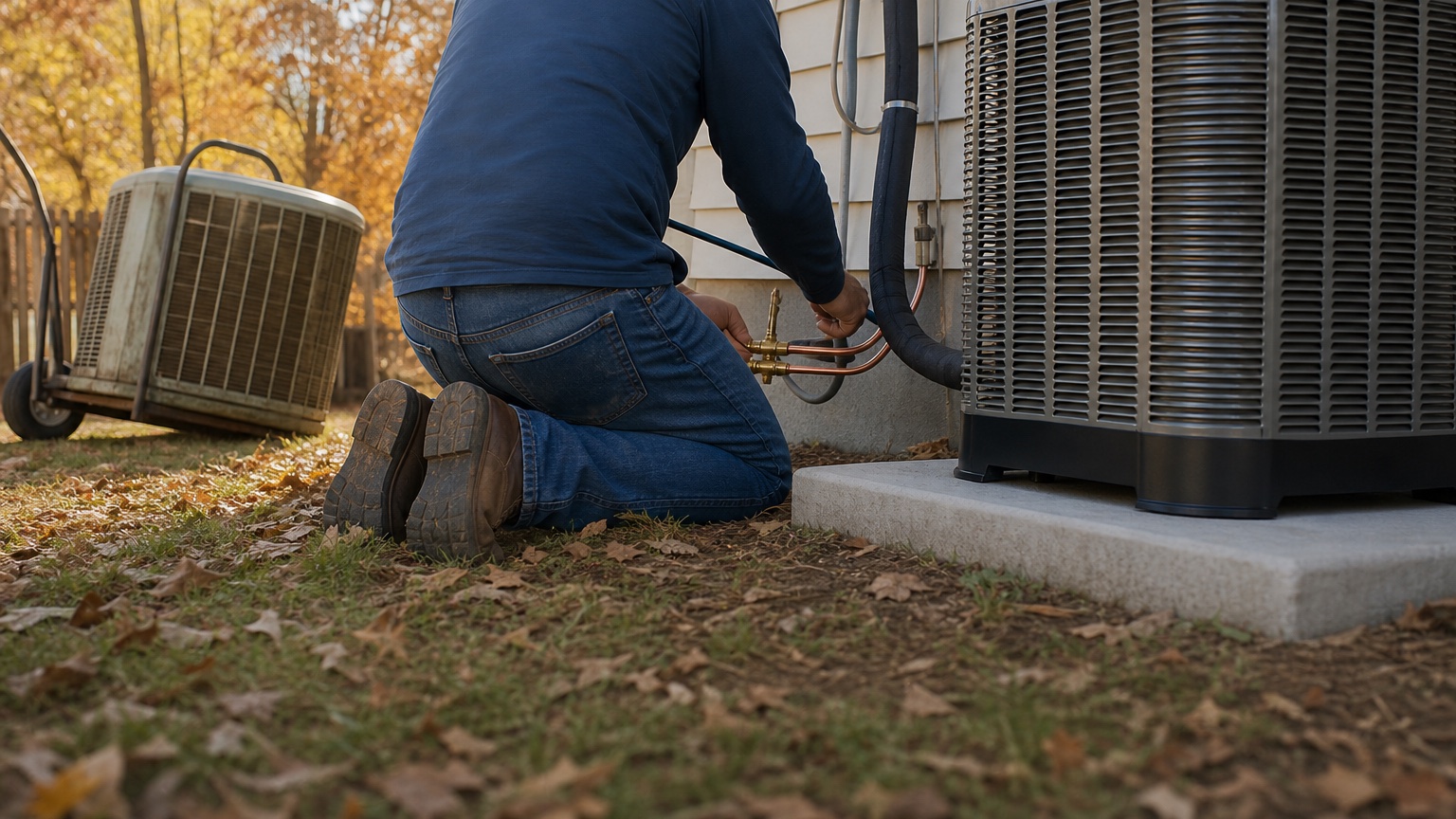
Short answer, as of November 2026: you can still install a new R-410A split system in a home or light commercial building, with no deadline, as long as every major component in that system was made in or imported into the US before January 1, 2025. You can still replace a failed R-410A condensing unit on an existing system. The deadline that is still coming is for VRF: January 1, 2027.
That is the effect of an EPA final rule published in the Federal Register on May 26, 2026, which took effect July 27, 2026. Plenty of pages online still say R-410A installs "ended" on January 1, 2026. That date is gone for pre-2025 equipment.
Here is what changed, what did not, and what to do with it before your next replacement quote.
What the May 2026 rule changed
Under the original 2023 Technology Transitions rule, new residential and light commercial AC and heat pump systems had to use a refrigerant with a global warming potential (GWP) under 700. That is why the market moved to A2L refrigerants like R-454B and R-32.
The 2023 rule gave a grace period for leftover R-410A equipment: systems built from components made or imported before January 1, 2025, could be installed until January 1, 2026. Builders, distributors and apartment developers told EPA that was not enough time and that inventory would be stranded.
The 2026 rule removes that installation deadline entirely. The regulation now says new systems using a refrigerant at or above the 700 limit "may continue to be installed where all specified components of that system are manufactured or imported prior to January 1, 2025."
EPA gave two reasons in the rule:
- The switch to A2L happened faster than expected, which left more R-410A equipment sitting in warehouses.
- R-454B was hard to get in the field in 2025. EPA wrote that while total supply was sufficient, there were problems getting it into service cylinders for contractors, which caused shortages in some regions and left some techs unable to charge new units at install.
What did not change
- The 700 GWP limit itself. Anything manufactured or imported on or after January 1, 2025, for a new residential or light commercial split system still has to be under 700.
- Repairs. Servicing and recharging existing R-410A systems was always allowed and still is.
- Labeling. Components made for refrigerants over the limit must carry a permanent label that says "For servicing existing equipment only."
The rule in practice: three common jobs
1. Full changeout with a pre-2025 R-410A system
Allowed, if all the specified components were manufactured or imported before January 1, 2025. In a typical split system that includes the outdoor condensing unit and the indoor evaporator coil, not just one of them.
Be ready to prove it. Before you quote it:
- Check the manufacture date on the data plate or decode it from the serial number for both the outdoor unit and the coil.
- Get the distributor to put the manufacture dates on the invoice, or keep a photo of each data plate in the job file.
- Do not pair a pre-2025 R-410A condenser with a 2025-or-later coil and call it a pre-2025 system.
2. Replacing only the failed condensing unit
Allowed. EPA looked at this question again in the 2026 rule and kept the existing treatment: a homeowner "can choose to replace their failed condensing unit rather than purchase a whole new system." EPA compared it to the R-22 phaseout, when condensing-unit replacements were also allowed.
The replacement condensing unit can be a newly manufactured unit built for servicing existing equipment. That is why you see R-410A units labeled "For servicing existing equipment only."
3. The catch: you only get one of the two halves
EPA spelled out the limit in the rule. If you replace the condensing unit and keep the indoor coil, that is a repair. But if the indoor coil is later replaced too, that later job counts as installing a new system, and it cannot use a refrigerant over the 700 limit. The same works in reverse: replace the coil first, and a later condensing unit replacement becomes a new system.
EPA's position is that replacing every component over time is the same as installing a new system.
Worked example. A 2016 R-410A system loses its compressor. In 2026 you replace the condensing unit with a service-labeled R-410A unit and keep the original coil. Legal. In 2029 the coil starts leaking. Replacing that coil now means both halves have been swapped, so the job is treated as a new system and has to use a compliant refrigerant.
That is worth saying to the customer at the first repair, in writing, so it is not a surprise later.
Coming up: VRF on January 1, 2027
If you do light commercial work, this is the date to watch. EPA's sector table, last updated August 28, 2026, lists January 1, 2027 as the installation compliance date for new variable refrigerant flow (VRF) systems, with the same 700 GWP limit.
What the same EPA table says about leftover VRF equipment:
- New VRF systems above the limit can be installed until January 1, 2027 only if all components were manufactured or imported before January 1, 2026.
- Systems going into buildings with an approved building permit issued before October 5, 2023 can be installed until January 1, 2028, under similar conditions.
If you have a VRF job on the books that is slipping into next year, find out today which refrigerant it uses, when the equipment was made and when the permit was issued.
Will you be able to get R-410A refrigerant?
For now, yes. The ACHR News reported in August 2026 that nearly 80% of HARDI distributors had R-410A inventories at or above target going into the 2026 cooling season. HARDI's Alex Ayers described "a significant glut of virgin R-410A." AHRI's Samantha Slater said contractors report ample supply for servicing existing systems, but warned that prices may rise as supply shrinks.
The bigger step is 2029. Ayers told the publication that in 2029 the US will be at 30% of the baseline HFC supply, so service will lean more on recovered and reclaimed refrigerant. In the same article he made the point bluntly: refrigerant vented today cannot be used to service equipment later.
Meanwhile, new-equipment sales have already moved on. HARDI reported that A2L equipment was 91% of central ducted distributor sales in September 2025, and The ACHR News reported 99% of ducted sales by June 2026. About 3% of ductless sales were still R-410A.
How to quote it to a homeowner
A pre-2025 R-410A system or a condensing-unit-only repair can be the cheaper option today. EPA itself described it as a potentially lower-cost choice. It is also the option with more questions attached. Give the customer both and let them choose with the facts:
Option A: R-410A (pre-2025 inventory, or condensing unit only)
- Often lower upfront cost, if the distributor still has documented stock.
- Uses a refrigerant that will get scarcer after the 2029 step down, and may cost more to recharge later.
- Condensing-unit-only: the next coil replacement means a full system change.
Option B: new A2L system (R-454B or R-32)
- Matched outdoor and indoor equipment, built to current rules.
- Refrigerant that the market has standardized on.
- Higher upfront cost in most cases.
A phone script for the question you will get
Customers have read that "410A is banned." When they call, the answer should be the same no matter who picks up:
"No, it's not banned. We can still repair your system and recharge it with R-410A. If the outdoor unit fails, we can usually replace just that unit. We'll also quote a full new system on the newer refrigerant so you can compare. Can I book a tech to look at it and give you both prices?"
Put that script next to every phone in the shop, and make sure whoever answers after hours has it too. If you use an answering service or an AI receptionist such as Rivet, add it to the call script so the question gets a straight answer and the call ends in a booked visit.
Checklist for this week
- Ask your distributors what pre-2025 R-410A outdoor units and matching coils they still hold, with manufacture dates.
- Add a "manufacture date, both components" field to your changeout paperwork and photograph both data plates.
- Write a one-paragraph note for customers explaining the one-half rule for condensing-unit-only repairs.
- Review any VRF work scheduled near or after January 1, 2027.
- Recover every pound. Reclaimed R-410A is what will keep your existing customers running after 2029.
- Recheck EPA's Technology Transitions page before big jobs. The rules have been revised twice since the 2023 rule, and legal challenges to the 2023 rule were on hold in federal court as of May 2026.
This is a summary for shop owners, not legal advice. The text that binds is 40 CFR Part 84, Subpart B.
Sources
- Federal Register, May 26, 2026: Phasedown of Hydrofluorocarbons, Reconsideration of Technology Transitions Requirements (final rule)
- EPA: Technology Transitions HFC Restrictions by Sector
- HARDI: A2L Equipment Reaches 90% of Market Share as Cooling Season Ends
- The ACHR News: There's Plenty of R-410A to Be Found, for Now
Keep reading
Holiday lights tripping the GFCI: an electrician's phone script and the fixes worth quoting
Most holiday-light trip calls are a GFCI doing its job. Here is a 90-second phone script with red flags, an on-site checklist built on the NEC outdoor receptacle rules, and the three fixes to quote.
Nov 21, 2026 · 8 min read
CO alarm calls: what your CSR should say in the first minute, and what the tech checks after
A word-for-word phone script for carbon monoxide alarm calls, a fast way to tell an alarm from a low-battery chirp, and the whole-house checklist your tech should run once the fire department clears the home.
Nov 21, 2026 · 7 min read
Ice dam calls: a roofing shop's phone script, insurance talk and the fix to quote after the thaw
Sort every ice dam call into one of three jobs in the first minute, tell callers honestly what insurance usually covers, and turn this winter's emergency visits into air-sealing, ventilation and ice-barrier work.
Nov 19, 2026 · 8 min read